U.S. House · UT-03
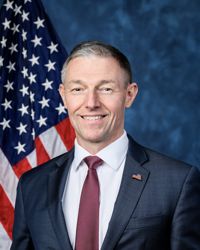
Kennedy, Mike
RUtah 3rd38 issues mapped from the public record
Stances are based on mapped issues and the public record (Congress.gov, FEC, and related sources). Add your own views to see how you line up.
Public record freshness
- Legislator stats: May 29, 2026
- Vote ingest: May 29, 2026
- FEC sync: Mar 20, 2026
- Finance cycle: 2026
Your alignment

Issue spotlight
High confidence based on 20 mapped decisive vote(s): 1 supporting and 19 opposing with 1 absence/present vote(s).
19
Opposing votes
1
Supporting votes
21 votes analyzed
Issue voting record
Based on public votes and official records. Browse by topic or sort by confidence.
High confidence based on 34 mapped decisive vote(s): 6 supporting and 28 opposing.
6 supporting · 28 opposingHIGH confidence
High confidence based on 30 mapped decisive vote(s): 3 supporting and 27 opposing with 1 absence/present vote(s).
3 supporting · 27 opposingHIGH confidence
High confidence based on 25 mapped decisive vote(s): 17 supporting and 8 opposing with 1 absence/present vote(s).
17 supporting · 8 opposingHIGH confidence
High confidence based on 19 mapped decisive vote(s): 4 supporting and 15 opposing with 1 absence/present vote(s).
4 supporting · 15 opposingHIGH confidence
High confidence based on 18 mapped decisive vote(s): 12 supporting and 6 opposing with 2 absence/present vote(s).
12 supporting · 6 opposingHIGH confidence
High confidence based on 18 mapped decisive vote(s): 14 supporting and 4 opposing.
14 supporting · 4 opposingHIGH confidence
What kind of representative is this?
HIGH confidenceRep. Kennedy voted with his party 93.5% of the time across 323 recorded votes, though attendance was 58.4% with 230 missed votes. He opposed immigration restrictions (4 supporting, 21 opposing across 25 mapped votes), climate action (14 supporting, 33 opposing across 47 votes), and environmental protection (19 supporting, 33 opposing across 52 votes). He supported defense spending (26 supporting, 15 opposing across 41 votes) and foreign aid (14 supporting, 9 opposing across 23 votes). On economic issues, he showed mixed patterns: opposing affordable housing, job creation, and small business support, while supporting education affordability and energy cost measures. Healthcare and spending votes split evenly.
Opposed immigration, climate change, and environmental protection based on 25–52 mapped votes per issue
Supported defense spending (26 pro votes) and foreign aid (14 pro votes)
Mixed stance on economic issues
opposed affordable housing and job creation; supported education affordability
93.5% party-line voting; 58.4% attendance with 230 missed votes
- Neutral on government spending, healthcare, and infrastructure despite substantial vote counts
Signature issues
- Immigration — Opposed immigration: 21 opposing vs. 4 supporting votesHIGH confidence
- Climate Change — Opposed climate change action: 33 opposing vs. 14 supporting votesHIGH confidence
- Defense Spending — Supported defense spending: 26 supporting vs. 15 opposing votesHIGH confidence
- Environmental Protection — Opposed environmental protection: 33 opposing vs. 19 supporting votesHIGH confidence
- Education Affordability — Supported education affordability: 12 supporting vs. 5 opposing votesHIGH confidence
Synthesized from public voting and stance records only; not motive, corruption, electoral prospects, or district-wide opinion.
38 mapped issues • Updated May 23, 2026 • 38 non-gated high-confidence issues · Model claude-haiku-4-5-20251001
About and public record
Sources & transparency
- Congress.gov — votes and bills
- FEC.gov — campaign finance
Sources: Congress.gov · FEC · public disclosures. Methodology and citations on this district record.